
The Massacre of Rạch Giá
By Jason for Discover Kampot

On the morning of June 17th, 1868, a Chinese cattle merchant was travelling from Châu Đốc along a canal to Rạch Giá, a small port on the Gulf of Siam just south of the Cambodian border. The port was originally founded by Chinese settlers and had been occupied by the French just the year before.
The merchant never made it to Rạch Giá. Somewhere along the canal, he came upon thirteen wooden spikes planted along the bank, each one topped with a severed French head.
The merchant turned back and headed to Long Xuyên, where he reported what he had seen to the French authorities.
The message was quickly relayed through the colonial administration by telegram, first to Vĩnh Long and then onward to Mỹ Tho. A relief expedition was assembled and dispatched toward Rạch Giá.
Three officers led the operation: Captain Dismuratin commanded a detachment of marine infantry; Lieutenant de Taradel led a force of colonial militiamen; Lieutenant Richard supported the expedition from the water aboard a small steam vessel.
The rebels had positioned themselves along the route, forcing the French expedition to fight its way forward. The French detachments forced their way into Rạch Giá and retook the settlement.
The leaders of the insurgents fled by sea toward Phú Quốc.
Once the French had secured the town, Cambodians from the surrounding countryside brought in a man named Duplessis. He was the sole survivor of what would come to be known as the Rạch Giá massacre.
From him the French officers learned what had happened.
At four o’clock in the morning on June 16th, the small French post at Rạch Giá had been attacked without warning. The fortification was little more than an earthen enclosure and was still unfinished; the main gate had not yet been completed. Only thirty soldiers were stationed there.
The attackers overwhelmed the sentry first, killing him before the alarm could properly be raised. Most of the soldiers, separated from their officers in the darkness, never reached their weapons. Commandant Sauterne fought back hard before he was killed. The post inspector was immediately surrounded and massacred.
About ten soldiers held out for a few moments, broke through, and scattered into the village, but all were hunted down and captured.
Duplessis alone managed to flee into the countryside. For two days he hid among the undergrowth, surviving on what little he could find. Finally, driven by hunger, he cautiously approached a small hut.
A Vietnamese man and woman living there took him in and gave him rice to eat. To reassure the frightened soldier, they ate from the same bowl first, showing that the food had not been poisoned.
Duplessis survived. So did the rebel leader who was responsible for the massacre.

Seventeen years later, a rebellion would break out in Kampot. 1,500 insurgents would end up fortifying themselves on Phnom Sa, White Mountain, just outside of Kampot.
Adhémard Leclère, who served as Resident of Kampot from 1886 and later wrote the history of the rebellion, would refer to their leader as “l’auteur du massacre de Rach-Gia,” the perpetrator of the Rach-Gia massacre, a Chinese pirate named Quan Khiem.
The Khmer called him Sdach Samut, or “the King of the Sea.”
Sources:
J. C. Baurac, La Cochinchine et ses habitants (Saigon: Rey, Curiol & Cie., 1894)
Adhémard Leclère, “Histoire de Kampot et de la rébellion de cette province en 1885-1886,” Revue Indo-Chinoise, n°60, 30 June 1907
Further reading
Mun Sui: The King's Pirate
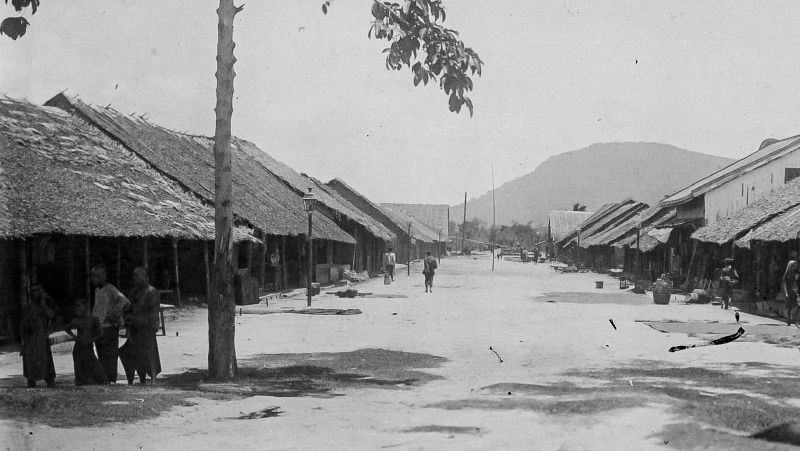
A Chinese pirate arrived in Kampot in 1858 with a hundred men and a plan to burn the town. The king made him commander of the coast-guard.
The History of Bokor Mountain
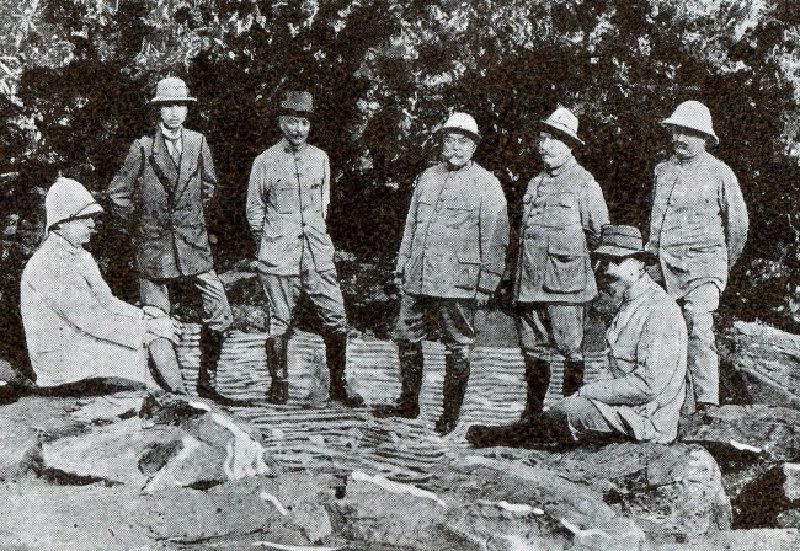
Before Bokor became a colonial hill station, it was a mountain of local names, warnings, and stories: visible from Kampot, but still outside the world the French thought they understood.
Kidnapped by the Khmer Rouge: The 1994 Kampot Train Attack
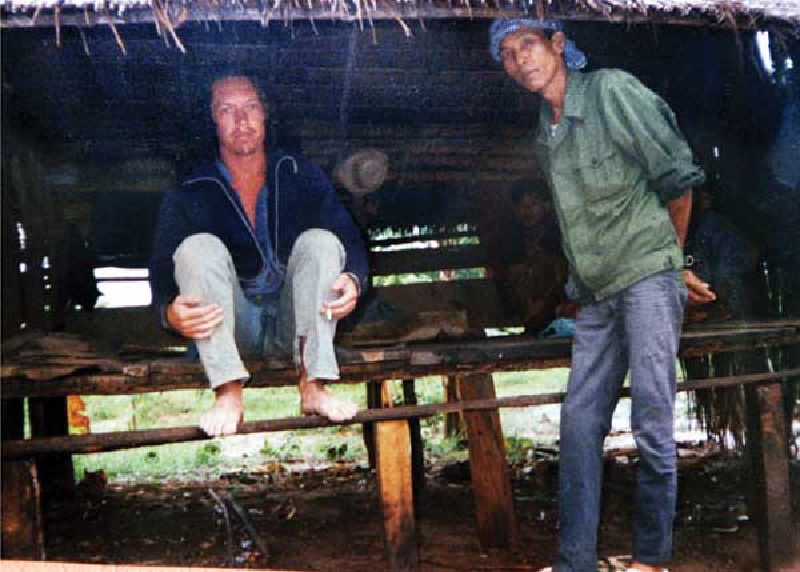
In July 1994, three backpackers took a train from Phnom Penh to Sihanoukville. It was a journey that would lead them into the heart of a Khmer Rouge stronghold in Kampot Province.

Books About Cambodia: Where to Start Reading
A reading list for understanding Cambodia and the Khmer Rouge, from David Chandler's history to survivor memoirs and the In the Shadows of Utopia podcast.
Where to Eat in Kampot: Best Breakfast, Restaurants, and Street Food
A local tour guide's favorite places to eat in Kampot, from the best breakfast spots and Khmer seafood to international restaurants and street food at Kampot Food Street.