
In 1906, while a seventeen-year-old Roland Meyer was watching the Cambodian royal ballet in Marseille, a thirty-eight-year-old administrator named Armand Rousseau was taking up a new posting at Kampot.
Little was left of the Kampot Auguste Pavie had known, twenty-five years earlier. The rebellion of 1885, when the Cambodians rose up against the French Protectorate, had destroyed villages and driven many residents away.
But the recovery had begun. The old Chinese port downriver at Prey Srok had lost its importance, and a new town was rising upriver in its place: a few dozen brick shophouses now lined the riverbank where the old town of Kampot stands today, though the muddy streets were still home to opium dens and gambling houses.

A French writer, promoting the town in 1903, caught it mid-transformation. “Yesterday,” he wrote, Kampot “was an inextricable chaos; today, a coquette decking herself out in her finest attire.”
Making good on that fell to Rousseau.
He was born in 1867 in France, trained at the École coloniale, and entered the service in 1893. He rose quickly through the Phnom Penh administration, reaching administrateur des services civils by 1895 before taking his first provincial command at Pursat in 1898.
In 1897, the French administration formally moved to abolish slavery in Cambodia. It ended the hereditary royal-slave status of the Pear, a Mon-Khmer people of the Cardamom highlands in Pursat, who had long been forced to deliver forest products such as cardamom, eaglewood, and gamboge as tribute to the king.
Rousseau was sent into the mountains to reorganize the Pear’s administration under the new order. With forty elephants and some sixty ox-carts, he travelled from village to village, interviewed roughly a thousand people, and recorded the abuses of the old system.
At Seneng-Pras, Rousseau read the Pear the decree that had declared them free. He had thirty-five villages elect their own officials, then asked them to decide how their cardamom should be handled. They chose a cooperative arrangement that kept the old mandarins and private traders out of the process.
Rousseau rarely made himself the hero of his reports. Here, for a moment, he allowed himself some pride. “I would not wish to praise a work that is somewhat my own,” he wrote, “but I do want to bring out how favorable it is, for the good name of our administration, that among these peoples so heavily exploited until then, each year a French official should appear in the Pear villages to hand them, in person, relatively considerable sums of money.”
In September 1902, on leave in France, he married Charlotte Émilie Rouilly, and brought her back that October to a new posting at Prey Veng. Just over nine months into the marriage, she died. Her death record gives no cause.
He took convalescence leave in France, returned to Cambodia in 1904, and in 1906 was posted to Kampot. He remarried in 1909, at Pursat, to Yvonne Petetin, a divorced Frenchwoman living in the town, and brought her back to Kampot the next March. Within the year she had sailed for France, on a first-class passage the administration reimbursed him for; he stayed at his post.
Kampot was not a prestigious posting. The previous administrators treated it as a brief stop on the way to something better. Rousseau treated it differently: over the next sixteen years he kept returning until Kampot became the defining work of his career.
He replaced the old market with the one that still stands near the river, reused the old timber and brick for a wooden jetty and a fish market at the water’s edge, redrew the grid of streets the town still uses, and brought fresh water down from the Kamchay foothills. He had not found a home so much as built one.
The road from Phnom Penh to Kampot, begun before Rousseau arrived, was completed during his Kampot years, the first hard-surfaced road in Cambodia. Within a few years cars were running on it to the coast.
Back in Paris, a French deputy, Maurice Viollette, was less impressed. In a report to the Chamber of Deputies in July 1911, his complaint ran past budgets and waste to what the protectorate had made of the people it ruled. The Cambodians, he told the Chamber, were the administration’s to dispose of: taxable, conscripted at will, liable to every requisition, and punished above all for the offence of complaining. Their lives, he wrote, were “scarcely more worthy of interest than an animal’s”.
The labour that built the colony’s infrastructure was corvée: men conscripted from the villages they crossed, unpaid, and not free to refuse. Viollette singled out the Phnom Penh–Kampot road:
In Cambodia, where for nearly fifty years we have never carried out nor even prepared a public-works program, only one road has been built, the one from Phnom Penh to Kampot, to allow the few Frenchmen established in Cambodia’s capital to go on seaside holidays.
The road reached Kampot and stopped there, the mountain rising past where it ended. For years Roland Meyer had been pressing his case for the mountain, with a growing file of sketches, profiles, and plans. The surveyors in Phnom Penh encouraged him. Rousseau’s administration at Kampot did not.
It was not indifference. Rousseau had just watched the road to Phnom Penh held up in the Chamber as a vanity built for Frenchmen at the seaside. His own work did not invite that question. He built practical things, the kind that make a town liveable. Nobody writes a parliamentary report about a fish market.
Meyer was powerless. Rousseau was uninterested. But a war was about to start in Europe, and it would change everything.
Pour aller plus loin
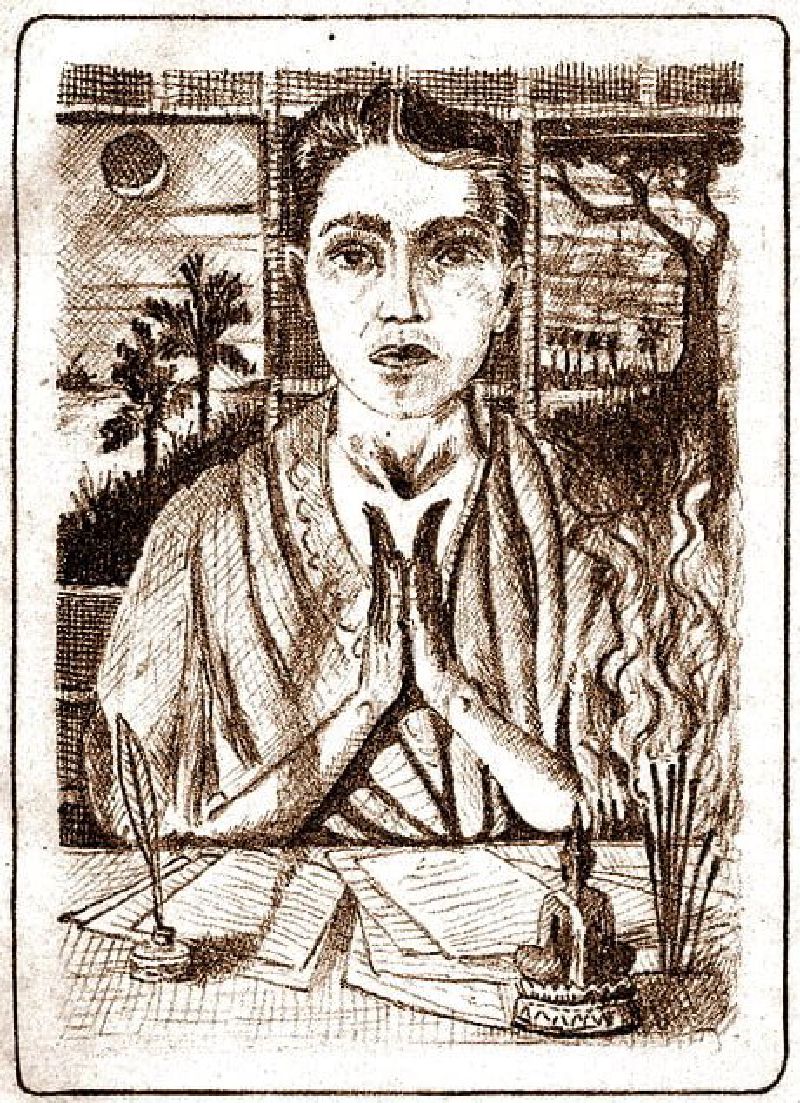
The Someone Who Came
Roland Meyer fell in love with Cambodia at seventeen, went native, and spent ten years dreaming of a resort on the mountain Cambodians called Popokvil. The administration ignored him, then took his idea.
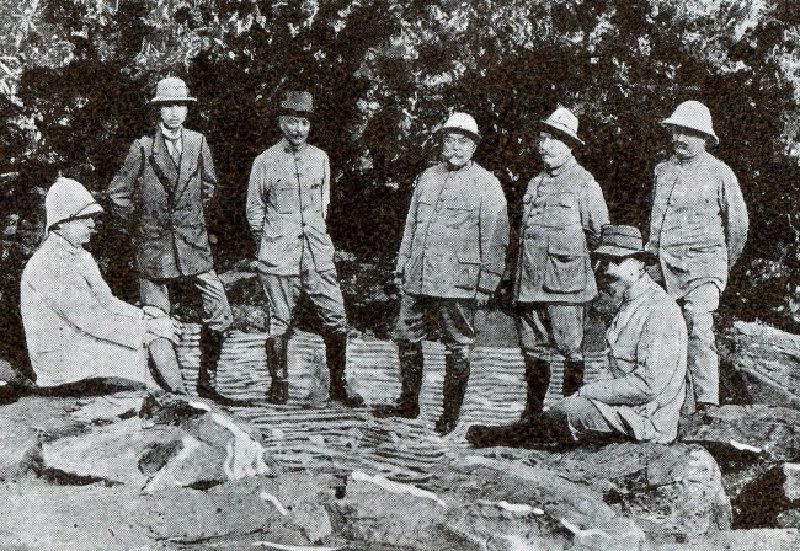
The History of Bokor Mountain
Before Bokor became a colonial hill station, it was a mountain of local names, warnings, and stories: visible from Kampot, but still outside the world the French thought they understood.
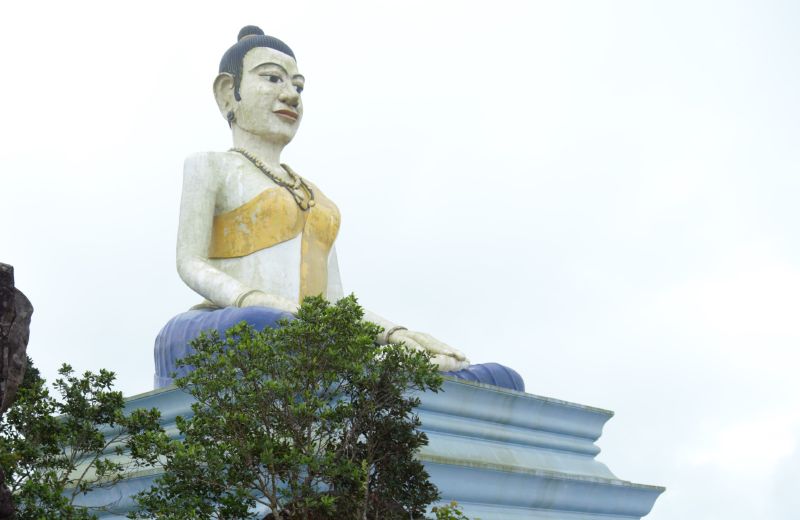
La Statue Géante du Mont Bokor : Qui Est Lok Yeay Mao ?
La statue géante du Mont Bokor porte un nom : Lok Yeay Mao, l'esprit gardien de Kampot. Ses légendes, ses sanctuaires, et pourquoi elle veille encore sur les voyageurs aujourd'hui.