

In 1879, Auguste Pavie was assigned to the tiny port of Kampot. He was thirty-two years old, a telegraph operator, sent to replace a colleague who had died.

He arrived to find a quiet town. Kampot had long been Cambodia’s only direct window to the sea, a way to bypass the heavily taxed Mekong route through Vietnam. But after France established its protectorate in 1863 and took Cochinchina, the river route opened, and Kampot’s importance waned.
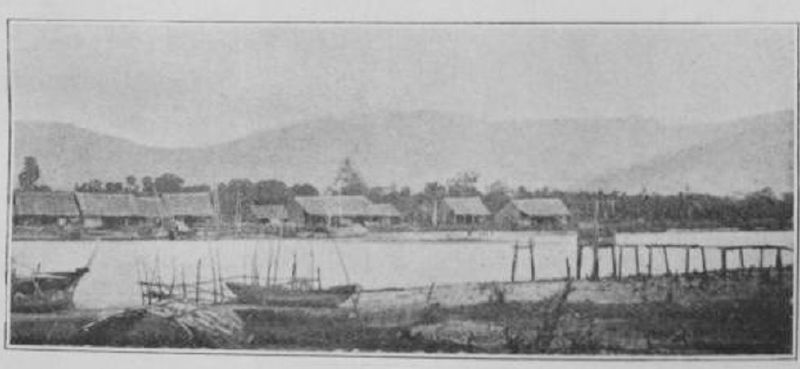
The town itself was built of wood and thatch. “In the main street,” Pavie wrote, “barely twenty merchants lay out their everyday wares. Under the awnings of a few houses, women weave silk or cotton; here and there, unoccupied houses fall into ruin; the streets seem almost deserted; only the riverbank, lined with boats, has kept a little movement.”

Several hundred Chinese ran the port’s commerce and its pepper plantations. A roughly equal number of Vietnamese worked the Gulf as fishermen, and a larger Khmer and Cham population lived in the surrounding countryside. What the region produced left by sea: pepper and indigo from the plantations, turtle shell, mother-of-pearl, and sea cucumber from the Gulf, all of it gathered for the Chinese junks that anchored in the bay half the year, too large to make their way up the shallow river.
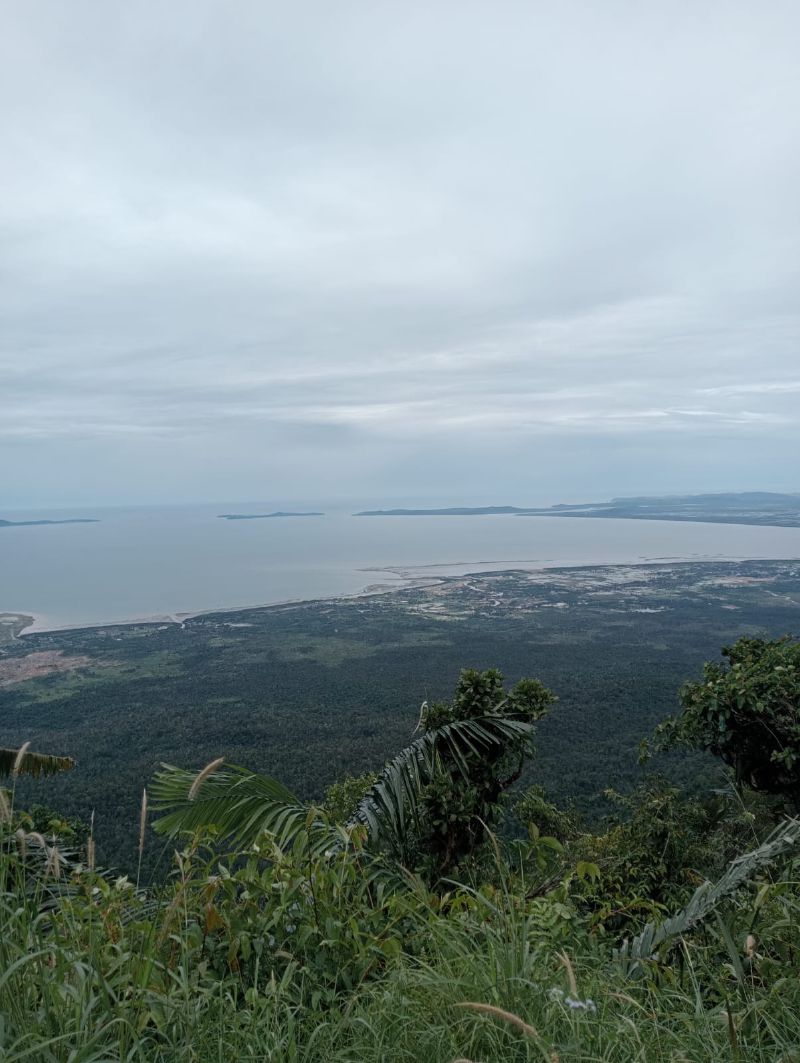
Pavie lived in a house behind the market, between a stream and a Buddhist temple. From there he could see the mountain range that dominated Kampot’s horizon.

In his writing, Pavie never used the name Bokor. He referred to it by the names the locals used: Popok-Vil, Kamchay, Véal-Srè-Moroï. What Pavie knew of the mountain was mostly from local descriptions. Cambodians told him that when Siamese invasions came, terrified villagers abandoned their homes and, “hacking a path through the forest with axes, ran toward this solitude to seek shelter.” Over time, Pavie wrote, the place took on “a mysterious, supernatural character.”
He never climbed it himself. “How much I regretted, among other things, never having visited the retreat of Véal-Srè-Moroï, whose description I so often heard! No doubt someone, later, will want to see this solitary place that people made out to be mysterious.”
He was right. Someone would come. Then more people came. The mountain Cambodians had long regarded with fear and reverence, the French would set out to conquer. They would carve a road up through the forest and build, at the top, a grand hotel in the clouds. The project would cost men their fortunes, others their reputations, and, in the end, hundreds, if not thousands, of people their lives.
Pour aller plus loin
The Man Who Built Kampot
Armand Rousseau treated a backwater posting as his life's work, rebuilding Kampot into the town that still stands. For years he ignored the romantic who kept depositing plans for a mountain resort.
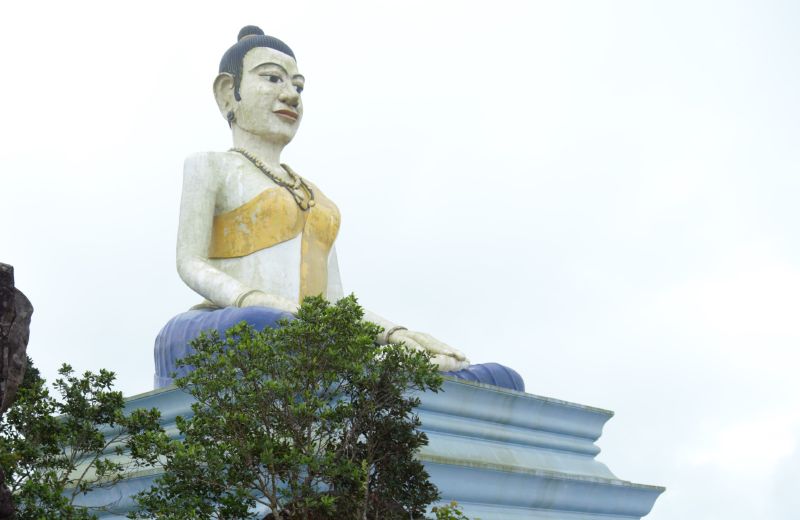
La Statue Géante du Mont Bokor : Qui Est Lok Yeay Mao ?
La statue géante du Mont Bokor porte un nom : Lok Yeay Mao, l'esprit gardien de Kampot. Ses légendes, ses sanctuaires, et pourquoi elle veille encore sur les voyageurs aujourd'hui.

Livres sur le Cambodge : par où commencer
Une liste de lecture pour comprendre le Cambodge et le Khmer Rouge, de l'histoire de David Chandler aux mémoires de survivants et au podcast In the Shadows of Utopia.